

Sclerotherapy
Sclerotherapy is a chemical ablation method used to close damaged or varicose veins by injecting a special medication – a sclerosant – into the vein. Depending on the diameter of the affected vein, the sclerosant can be administered either in foam or liquid form. The advantage of foam sclerotherapy is that the foam completely fills the damaged segment of the blood vessel, maximizing contact with the vessel walls and producing a much stronger effect.
What is sclerotherapy and how does it help leg veins?
Foam sclerotherapy can also be used to close major veins; however, it is by no means comparable to other endovenous treatment methods. Sclerotherapy is not an equivalent to biological vein glue. When biological vein glue is used, the vein contracts strongly and seals shut immediately. The effect is instantaneous.
In contrast, sclerotherapy chemically affects the inner lining of the vein, gradually causing it to close over time. The closed vein is eventually absorbed, and blood circulation is redirected to healthy veins. The procedure improves the appearance of the legs and reduces heaviness, swelling, and discomfort.
Who is sclerotherapy suitable for (indications)?
Sclerotherapy is suitable for patients who have:
Small superficial veins (“spider veins”);
Reticular (bluish) veins;
Small and medium-sized varicose veins;
A feeling of heaviness in the legs, fatigue, or swelling due to venous insufficiency;
A cosmetically disturbing network of veins.
The most appropriate treatment method is determined by a physician after a vein examination.
How is sclerotherapy performed?
Certain forms of varicose disease—for example, when a branch of a vein is varicose but the main trunk of the large vein is not affected—can be treated with foam sclerotherapy. The procedure is also performed under ultrasound guidance. Foam sclerotherapy can be used if the vein diameter does not exceed 1 cm.
During the procedure, a foamed medication is injected into the vein, which destroys the inner lining of the vein, causing it to close. After the procedure, patients can go home immediately. Moreover, foam sclerotherapy does not require anesthesia and can be performed regardless of age or general health condition. Compared to other methods, foam sclerotherapy is approximately ten times less expensive, making this treatment accessible to a wider range of people.
The sclerotherapy procedure takes approximately 30 minutes.
Before and after sclerotherapy: results gallery
Before | After |
|
|
|
|
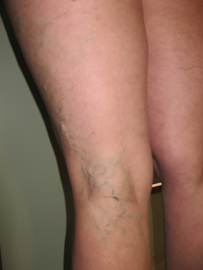
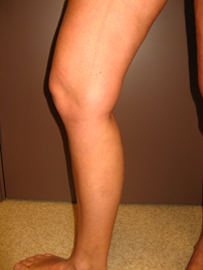
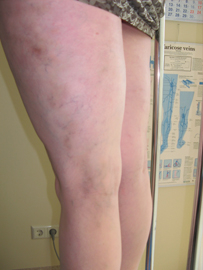
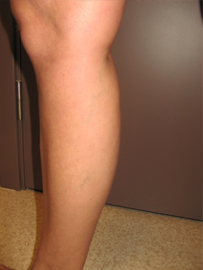
Side effects, risks, and contraindications of sclerotherapy
Sclerotherapy is a safe and widely used treatment method; however, like any medical procedure, it may also cause side effects. Most commonly, these are mild and temporary:
redness, slight swelling, or tenderness at the injection site;
small bruises;
temporary skin pigmentation over the treated vein.
In rare cases, inflammation, an allergic reaction, or deep vein thrombosis may develop. To reduce the risk of complications, it is important to follow the doctor’s instructions, including wearing compression stockings after the procedure.
It should be noted that a good cosmetic result usually becomes visible gradually — over the course of several weeks. In some cases, repeat procedures may be necessary. Recurrence of the condition is also possible, although it occurs less frequently than after traditional vein surgery.
The risk of skin pigmentation may increase if an inappropriate concentration of the sclerosing agent is used, especially in foam form; therefore, the physician’s experience and professionalism are very important.
Aftercare following sclerotherapy
After the procedure, the patient must wear compression stockings prescribed by the doctor for 14–20 days.
The patient may continue normal daily activities, avoiding only hot baths, saunas, and preferably air travel.
There is a myth that the treated vein can reopen after sclerotherapy — this is false. The treated blood vessel cannot regenerate, but other diseased veins may develop over the course of life.
Frequently Asked Questions about Sclerotherapy
Is sclerotherapy painful?
Sclerotherapy is usually not painful. During the procedure, you may feel a slight needle prick and mild burning or pressure at the moment of injection, which quickly disappears. Most patients tolerate the procedure well, and anesthesia is generally not required.
How long does the procedure usually take?
A sclerotherapy session takes about 30 minutes. The exact duration depends on the number and size of veins being treated.
When are the results of sclerotherapy visible?
The first results are usually visible after 2–4 weeks. For larger veins, improvement may appear later, after 1–2 months. In some cases, several sessions are needed to achieve the best result.
What is foam sclerotherapy?
Foam sclerotherapy is a method where the sclerosant medication is injected in foam form. Foam fills the vein more effectively and provides better contact with the vein wall, making this method especially suitable for treating larger or more prominent veins.
What are the side effects of sclerotherapy?
The most common side effects are mild and temporary—redness, slight swelling, bruising, or temporary skin pigmentation at the injection site. In rare cases, inflammation, an allergic reaction, or deep vein thrombosis may occur. The risk can be reduced by following the doctor’s recommendations after the procedure.
How much does sclerotherapy cost?
The cost depends on the size of the treated area and the number of sessions required. Exact pricing can be determined after a medical consultation and vein examination.
Can I fly after sclerotherapy?
Short-distance flights are usually allowed, but long flights are not recommended during the first few days after the procedure due to an increased risk of thrombosis. It is recommended to consult your doctor before traveling and to follow compression therapy instructions.


